

By Setareh Kiumarsi
Have you ever heard the word gluten before..?!
Recently, you may have noticed that many organic or “healthy” products are labeled *“gluten-free.”* Or, if you live abroad (in the U.S. or Europe)…you’ve probably seen that almost every restaurant has a gluten-free menu, and people who want to live a healthier lifestyle often choose their meals from that section.
So, what exactly is gluten…!?
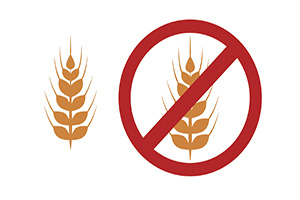
Gluten is a combination of two proteins found in certain grains such as wheat, bulgur, barley, oats… and others.
It’s the substance that gives dough its elastic and sticky texture.
Because of that, gluten-containing grains are much heavier, stickier, and harder to digest than gluten-free grains like rice or corn.
Some people due to conditions like celiac disease are extremely sensitive to gluten, and even a trace amount of it can cause severe digestive issues.
There are also other illnesses, as well as certain body constitutions (based on one’s temperament or dosha in traditional systems like Ayurveda), where avoiding gluten is recommended.
How does gluten affect the body…?!
Gluten is a heavy and sticky substance that gives foods their cohesive texture.
However, some people genetically lack the ability to digest it properly.
When a person with this issue eats gluten, their digestive system struggles to break it down. The undigested gluten turns into thick phlegm that sticks to the tiny villi (hair-like projections) along the intestinal walls.
This buildup triggers the immune system to react and causes inflammation in the gut. Over time, the immune response becomes overactive, leading the body to attack its own tissues and damage the intestinal lining.
As a result, ulcers and “leaky gut syndrome” (in which the intestinal barrier becomes porous) can develop, disrupting proper digestion and nutrient absorption.
(For more information, you can search for the term “Leaky Gut” online.)
Because of this, even a very small amount of gluten can cause major problems for people with this sensitivity.
The Link Between Gluten and Various Diseases..?!
The most well-known gluten-related disease is Celiac Disease, but in recent decades, research has suggested possible connections between gluten sensitivity and a wide range of other conditions, including:
Autoimmune diseases such as MS, lupus, rheumatoid arthritis, Graves’ disease, Hashimoto’s thyroiditis, and psoriasis
Irritable Bowel Syndrome (IBS)
Autism Spectrum Disorder
Attention Deficit Hyperactivity Disorder (ADHD)
In modern medicine, opinions about this connection differ some doctors support and promote the idea, while others strongly disagree with it.
Ayurvedic View on Gluten…!?
In traditional medicine, the balance or imbalance of the digestive system plays a key role in a person’s physical and mental health.
In fact, the root cause of most physical and psychological illnesses is improper digestion and the accumulation of toxins in the digestive tract.
You’ve probably heard people say that multiple sclerosis (MS) is a “cold disease” or a disorder caused by excess phlegm. In traditional medicine, individuals with celiac disease or other autoimmune conditions usually suffer from slow metabolism and weak digestion.
When digestion is weak, the body cannot properly process certain foods, which leads to the accumulation of undigested toxins and phlegm in the gut and throughout the body.
Other diseases that share this digestive issue include:
Diabetes, MS, lupus, rheumatoid arthritis, Graves’ disease, Hashimoto’s thyroiditis, psoriasis, Addison’s disease, dermatitis herpetiformis, gluten ataxia, IBD (Inflammatory Bowel Disease), IBS (Irritable Bowel Syndrome), schizophrenia, autism, and ADHD.
As mentioned, gluten is sticky, heavy, difficult to digest, and can cause allergic reactions. For most people with these conditions, the digestive system is unable to properly break it down, turning it into undigested phlegm.
The Most Important Steps for Healing..?!
One of the most effective steps in treatment is correcting the diet by eliminating phlegm-producing and hard-to-digest foods to strengthen digestion.
Therefore, removing gluten (along with cow dairy and sugar) which are all sticky and phlegm-producing is often one of the first steps toward healing!
The Main Signs of Gluten Intolerance….
* Bloating
* Alternating diarrhea or constipation
* Abdominal pain or cramps
* Chronic headaches
* Chronic fatigue
* Skin problems
* Depression, anxiety, restlessness
* Joint and bone pain
* Numbness in hands and feet
* Iron deficiency or anemia
* Mental fog (“brain fog”)
But Should Only People with Diseases Avoid Gluten..?!
Not necessarily. Even for people without diagnosed conditions, gluten-rich foods are sticky and heavy, and their consumption increases phlegm in the digestive system?!
Now, for people with Kapha-dominant constitutions (phlegmatic types) or those suffering from Kapha-related disorders such as diabetes, hypothyroidism, obesity, asthma, allergies, respiratory issues, PCOS, high cholesterol, depression, forgetfulness, or Alzheimer’s excessive consumption of gluten, cow dairy, and sugar worsens their imbalance.
Each time they eat these foods, they add another “chunk of phlegm” to the “ocean of phlegm” already in their bodies.
Dietary Recommendations
Limit foods made with wheat flour (especially white flour) such as pasta, pizza, sandwiches, pastries, and cakes.
Prefer whole-grain or multigrain breads, and those with warm spices like black cumin, fennel, caraway, or dill, as they’re lighter and produce less phlegm.
Up to 1–2 palm-sized pieces of such bread per day is fine.
Replace wheat-based foods with lighter grains such as:
Oats
Buckwheat
Basmati rice (long-grain)
Gluten-free breads
Please make sure to mention the author, “Setareh Kiumarsi,” if you share or republish this article, which was written with hope for everyone’s health and love.