By Setareh Kiumarsi
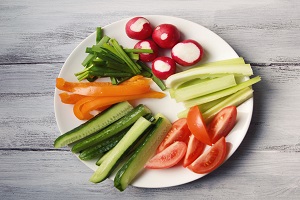
Think about a vegetarian’s lunch plate. What’s usually on it? All sorts of raw and cooked vegetables; lettuce, cauliflower, broccoli, spinach, eggplant, carrots, tomatoes, cucumbers, and more. A bunch of different legumes, lots of rice, bread, pasta, or noodles; maybe with a few slices of tofu, some cheese, a couple spoons of yogurt, or a handful of nuts.
This plate is often full of variety and, in many cases, even double the size of a non-vegetarian’s portion. But still, many vegetarians complain that no matter how much they eat, they don’t feel full — which leads to mindless overeating and, eventually, weight gain. Why does that happen?
To answer this, we first need to understand the qualities of foods; specifically, their warmth or coolness, and whether they’re moist or dry. Just like everything in nature (including people and animals), every food has its own unique temperament. Take onions, for example. They’re intensely sharp and pungent — almost like fire on the tongue — because they’re hot and dry in temperament. On the other hand, cucumbers are cool and water-rich; making them cold and moist in nature.
Vegetables and legumes make up the bulk of a vegetarian diet, and most of them are quite dry. Drying foods are like porous sponges — when you place them in water, they absorb moisture from their surroundings. When we eat them, they act as phlegm-reducing, fat-burning, or catabolic substances in the body.
Now, if most of your daily intake is composed of drying foods, the mucosal lining of your digestive tract becomes dry as well, which triggers a false sense of hunger. In response, your body begins craving moist, heavy, phlegm-producing foods like rice, bread, sugar, dairy, cheese, and yogurt — all of which are moist, fattening, and anabolic. This is your body’s attempt to repair the dry lining of the gut and regain balance; but it often leads to loss of control and overeating, filling the body with undigested phlegm.
To avoid this, it’s crucial to combine dry and moist foods in the right ratio and to prepare them correctly.
Now let’s look at raw vegetables. Have you ever heard someone say, “Don’t cook vegetables — you’ll destroy their nutrients”? Many vegetarians love making big raw salads without knowing the actual temperament (hot, cold, dry, moist) of each ingredient. And after enjoying these colorful, flavorful salads, they’re left with symptoms of Vata imbalance; bloating, gas, abdominal pain, constipation, body dryness, and more. Why does this happen?
As we said, many vegetables are drying and catabolic. These can be either warm or cold. So, which ones are cold and dry?
Endive, broccoli, potatoes, bitter gourd, lettuce, Brussels sprouts, green and red cabbage, celery, kale, coriander, cauliflower, green beans, peas, and all kinds of sprouts (mung, lentil, bean, etc.). These vegetables are high in the air element — they’re naturally cooling and reduce inflammation and internal heat. But when eaten raw, they act like a cold wind through your digestive system — dampening your digestive fire and slowing down your metabolism. That’s why raw, unspiced versions of these vegetables are actually ideal for people with hyperthyroidism or an overly fast metabolism.
However, if you eat these types of vegetables raw on a regular basis; for example, lettuce salad every day, you’ll gradually weaken your digestive fire, fill your gut with gas, and tip yourself into a chronic Vata (or dry-cold) imbalance.
So what’s the right way to consume these vegetables?
Cook them with the right oils — like coconut oil, olive oil, ghee, or canola oil — and season them well. For every three parts of warming spices (such as fennel, turmeric, cardamom, cinnamon, saffron, cumin, dried basil, thyme, rosemary, black seed…), use one part of cooling spices (like coriander seed, rose petals, or sumac). Cooking with the right oil balances the dryness, and the spices reduce bloating and ease digestion.
Remember — the body needs more heat than cold to keep its digestive fire strong. A living body is warm; a dead one is cold. So even cooked and seasoned, these vegetables should never make up more than 30% of your plate in one meal. (Those with excess Pitta or bile imbalance can go up to 40–50%.)
Now, if we can’t make salads out of raw lettuce, what can we use instead?
Does this mean we should never eat raw vegetables again and say goodbye to tasty salads forever?
Fortunately, the answer is no. Many vegetables that are warm and dry can be eaten raw and are excellent in salads.
Which vegetables are warm and dry?
Arugula, spinach, thyme, eggplant, green mustard leaves, mint, onion, radish, tarragon, leeks, parsley, corn, rosemary, basil, ginger, garlic, garden cress, turnip, fenugreek, dill, bell peppers, hot chili peppers, thyme, savory, shallot, beetroot, and carrots.
These warm vegetables stoke the digestive fire, while their dryness acts like a sponge, absorbing excess phlegm and burning fat.
Some of them, like carrots, parsley, basil, thyme, rosemary, savory, garden cress, and spinach, create a gentle warmth and don’t harm the gut lining when eaten raw — so you can confidently use them in raw salads.
But others — like turnips, fenugreek, tarragon, garlic, onion, scallions, chili peppers, chives, leeks, radishes, and ginger — are too sharp and can damage the gut lining or even cause ulcers if eaten raw. These should be cooked and seasoned before eating.
When making salads or cooking vegetables, try to use about 70% warm vegetables (many of which can be raw), and 30% cooling vegetables (which should be cooked and spiced). You can find a great example in our highlighted stories — the digestive salad.
So far, we’ve only discussed vegetables that are drying. But what about the ones that are moist?
Vegetarian Food Guidelines According to Ayurveda
Are Legumes Dry or Moist?
Vegetarians typically include a lot of legumes in their daily meals. Why? Because legumes are rich in protein and packed with vitamins; which makes them an essential plant-based food source.
But did you know that most legumes; including fava beans, lentils, split peas, various types of beans, mung beans, chickpeas, green peas, and green beans, are predominantly cold and dry in temperament?
Their drying effect is particularly strong. When consumed frequently or in large quantities over consecutive days, they can severely dry out the mucosal lining of your intestines. This increases Vata dosha (also known as Soda in Persian Ayurvedic terminology), pushing your digestive system — and your body as a whole — toward imbalance.
That imbalance can manifest as bloating, constipation, joint and muscle stiffness, anxiety, restlessness, and an overactive mind.
How Should Legumes Be Prepared?
To avoid these imbalances, soak your legumes overnight. Change the soaking water a few times, then cook them with digestive-friendly oils (like coconut oil, olive oil, ghee, etc.) and warming digestive spices such as fennel, thyme, rosemary, saffron, cinnamon, cumin, turmeric, and mountain thyme.
This process reduces their coldness and dryness, and makes them easier to digest.
Did you know that legumes are far easier to digest when cooked into soups or stews? That’s because the water content in these dishes balances out their dryness, lowering their tendency to cause bloating and gas.
How Much Legume Intake Is Ideal?
If you suffer from chronic Vata imbalance — meaning you frequently experience bloating, gastritis, constipation, stiffness in joints and muscles, anxiety, or restlessness — try to limit your legume intake to no more than once every 7 to 10 days. And in a single meal, legumes should make up no more than 20% of your plate.
When eating legumes, it’s also highly beneficial to drink a warm glass of digestive lassi alongside your meal. This drink brings warmth and moisture into your digestive tract and acts as a natural balancer for the drying qualities of legumes.
(You can find the recipe for this digestive lassi in our digestive drinks post.)
Even if you don’t have Vata imbalance, you should still avoid consuming legumes in large quantities — doing so can dry out your digestive lining and lead to Vata-related issues. In general, 2 to 3 times a week is more than enough.
It’s also helpful to know that small legumes like mung beans and red lentils are easier to digest than larger ones like chickpeas and kidney beans. Likewise, sprouted legumes are more digestible than dry, unsprouted ones.
Among all legumes, mung beans are considered the most Vata-friendly — if prepared properly with healthy oils and digestive spices, they do not disturb Vata and are much gentler on the system.
Which foods in a vegetarian diet are considered moist or phlegm-producing?
In earlier posts, we talked about drying, catabolic vegetables. But which vegetables are considered moist, or anabolic? Foods like cucumbers, zucchini, pumpkin, butternut squash, tomatoes, okra, sweet potatoes, mushrooms, and asparagus fall into this category — they are all considered moist or phlegm-producing in Ayurveda.
What about grains and carbohydrates? Are they dry or moist? Catabolic or anabolic?
Most grains — like wheat, white rice, brown rice, oats, quinoa, tapioca, and everything made from them such as bread, pasta, noodles, pastries, cakes, and cookies — are moistening. They create moisture and phlegm in the digestive tract.
And what about dairy? Cheese, butter, yogurt, cream, whey, they’re all moistening. Even tofu is considered moist.
Nuts and seeds? All types. Almonds, peanuts, cashews, pistachios, hazelnuts, sesame, walnuts, are oily and moist by nature.
So how should moist and dry foods be combined? Should a meal contain only dry foods? Only moist ones? Or a combination of both? And if both, what’s the ideal ratio?
Let’s talk about combining moist and dry foods — and in what proportions.
Think about your lunch plate. How much food can your stomach actually handle?
Imagine cupping your two hands together to form a bowl — the amount that fits in that bowl is about the ideal portion size for one meal.
Now, divide that plate in half. One half should contain moist foods — such as rice, bread, moist vegetables like tomatoes, mushrooms, zucchini, pumpkin, okra, as well as nuts, yogurt, cheese, tofu, or animal protein (if you’re not vegetarian).
The other half should be filled with drying foods — legumes, and drying vegetables like carrots, parsley, spinach, basil, beets, leeks, celery, cauliflower, and so on.
If your entire meal is composed of 100% moist, phlegm-producing foods; such as carbs, dairy, nuts, or animal protein, then your digestive system won’t have enough fire or strength to break down that sticky ball of undigested phlegm. You end up overloading the gut with unprocessed mucus and heaviness.
On the flip side, if your plate is 100% drying, like a salad filled only with raw veggies and legumes, then your gut lining will dry out. You’ll feel gassy, bloated, and suffer from intestinal dryness.
But when you combine moist and dry foods together, they balance each other out. The dry ingredients act like a sponge, soaking up the excess phlegm from the moist foods and assisting in digestion.
(You can find the full list of moist and dry foods in the previous posts under Vegetarian Guidelines According to Ayurveda.)
If you tend to have excessive dryness in your body — if you are Vata or Pitta dominant, and lean in body type — you can slightly increase the moist portion of your meals (for example, 60–70% moist + 30–40% dry).
If you have excessive moisture in your body — if you are Kapha or Damp dominant, and have a heavier build — then it’s better to slightly increase the drying portion of your meals (for example, 40–50% moist + 50–60% dry).
Please be sure to credit the author, Setareh Kiumarsi, when sharing or republishing this article, which was written with love and the hope of well-being for all.


