


By: Setareh Kiumarsi
How about we dive into the Vata dosha today, spend a little more time with it, and explore this dosha from the perspective of AyurYoga?
In Ayurveda, the body and mind are explained through three specific classifications called “doshas”: Vata, Pitta, and Kapha.
The first dosha is Vata. The elements of ether and air dominate it. It is cold, dry, light, subtle, rough, and mobile. Mobility is the most important characteristic of this dosha. All vital processes in the body involve directional movements. Think of the downward movement during urination, bowel movement, and menstrual flow; or the rhythmic movement of blood through the vessels, the flow of air in and out of the lungs, the beating of the heart, blinking of the eyes, the movement of joints and muscles, and even the movement within the mind. Vata, whose Sanskrit root means “carrier, transporter, or messenger,” acts like a vehicle in the body, responsible for all forms of movement.
In some individuals, Vata is genetically dominant and forms their Prakruti (constitutional nature). In others, Vata becomes imbalanced due to poor lifestyle choices and improper dietary habits. In Ayurveda, when we talk about the imbalance of a dosha, we mean that the qualities and elements of that dosha have increased in the body and mind. Excess Vata means that the elements of ether and air (and therefore cold and dryness) are dominant in a person’s system. Compared to Pitta and Kapha, Vata has the highest tendency to go out of balance.
Physical traits of Vata individuals
— Vata people are light and thin. Because ether and air dominate their constitution, their bodies have little mass, and gaining weight is difficult for them.
— Their height tends to be either very tall or very short.
— Their skin is cold, dry, rough, and prone to cracks.
— Their face is slender with sunken cheeks, dry skin, and fine or deep wrinkles.
— Their hair is dry, frizzy, and prone to split ends.
— Their eyes are small; the whites may appear dull, they blink quickly, and their eyes often feel dry.
— Their nose is bony, often with a deviated septum and dry nasal membranes.
— Their tongue is thin, small, dry, trembling, and full of shallow or deep cracks.
— Their nails are dry, brittle, rough, and dull with vertical ridges.
— Their hands and feet are often cold; cold easily penetrates their body.
— They dislike cold and dry climates and enjoy warm, humid environments.
— Excess ether and air cool and weaken their digestive tract. Their appetite varies: they get hungry quickly but feel full just as fast. Because of their lightness, they often feel “psychologically” hungry and tend to snack frequently.
Mental and emotional traits of Vata individuals
— They are constantly on the move and dislike staying in one place. They love travel and discovering new places.
— They are energetic and novelty-seeking. They dislike repetitive tasks and prefer doing several things at once.
— They are highly creative; their mind jumps easily. They are imaginative and talented in writing and artistic creation.
— They talk a lot, speaking quickly, shakily, and with breaks between phrases. Their voice is high-pitched, and they frequently jump from one subject to another.
— They memorize quickly but forget just as quickly.
Common Vata imbalances
— Bloating, burping, excess air in the digestive tract
— Abdominal pain and spasms
— Constipation and dry stool
— Cold hands and feet
— Tremors in the body
— Dryness of skin, eyes, hair, and joints
— Excess weight loss or inability to gain weight
— Insomnia, light sleep
— Anxiety, restlessness, overthinking
— Negative thoughts, fear, emptiness, loneliness, lack of focus, impatience
I’ll write about ways to bring Vata back into balance in the next post.
Balancing the Vata dosha
The dominant qualities of Vata are coldness and dryness. If Vata is genetically dominant in someone’s Prakruti, or if it has increased due to improper diet or lifestyle, they must reduce cold and dry qualities in their life and expose themselves to warmth and moisture.
Diet
If Vata is your dominant dosha or you’re experiencing Vata imbalance, reduce cold and dry foods and learn the proper way to consume them. Which foods are cold and dry?
— Most legumes. Avoid overeating legumes and dishes made primarily from them (like lentil soup, lentil rice, chickpea-heavy soups, falafel, hummus, etc.). If consuming legumes, do so only once every 7–10 days. Generally, small legumes (like mung beans or red lentils) are easier to digest than larger ones. Always soak them overnight, change the water several times, and cook with proper oils and warming spices. Legumes should make up only 10–20% of your plate (think of a rice dish with just a little mung bean mixed in). Drink one glass of digestive lassi with that meal.
— Cold and dry vegetables (lettuce, cabbage, cauliflower, broccoli, Brussels sprouts, endive, kale, celery, and cilantro).
Eating these raw in salads causes severe Vata imbalance. Consume them cooked with proper oils (ghee, sunflower oil, coconut oil, olive oil, or canola oil) and balanced spices. For every three parts warming spices (fennel, turmeric, cardamom, cinnamon, cumin, basil, thyme, rosemary, black seed, golpar, saffron, etc.), use one part cooling spice (coriander seed, rose petals, sumac, dried lime powder, mint).
Replace common raw salads with “digestive salad.”
— Potatoes are extremely cold and dry. Reduce dishes or snacks based on potatoes (like estamboli polow, chips and cheese, mashed potatoes, potato patties, baked potatoes…). If consuming them, use proper oils (olive, coconut, sunflower, canola) and warming spices (fennel, thyme, cumin, black seed, turmeric).
— Do not eat apples, quinces, or pears raw. Raw, they increase dryness in the digestive tract and worsen Vata imbalance. Cook them with balanced spices (cardamom, cinnamon, saffron, or vanilla) and a bit of syrup.
— Avoid bitter (like malt beverages), astringent (like quince), and pungent flavors (like red chili).
— Caffeine (coffee, instant coffee, black tea, green tea, cocoa) dramatically dries the digestive tract and severely aggravates Vata. Remove it entirely and allow your body to rebalance Vata through a caffeine-free lifestyle.
— Include one soupy meal daily. Your digestive tract needs warmth and moisture to return to balance. Two hours after every meal, drink a cup of digestive tea every hour. With lunch and dinner, drink one glass of digestive lassi. This lassi is one of the most effective remedies for balancing Vata.
Use balanced spices abundantly in cooking—fennel, cumin, cinnamon, cardamom, saffron, nutmeg, rosemary, thyme. Spices warm the body and strengthen digestive fire (Agni).
— Include sweet (like dates), sour (like oranges), and salty (like pickles) tastes in your diet.
Lifestyle
What lifestyle changes help?
The most essential factor for balancing Vata is having a routine. Bring order into your life. Set regular times for meals, work, exercise, sleep, and waking, and stick to them.
Remember: insomnia, late nights, and a disrupted sleep routine are major causes of Vata imbalance. Adjust your sleep schedule and avoid going to bed later than 10 PM.
Avoid exposure to cold and wind. Your body and mind love warmth and moisture.
Add oil massage with suitable oils (sesame or sweet almond), warm showers, and steam inhalation to your daily routine. Before sleep, massage the soles of your feet with the appropriate oil.
Avoid intense workouts, especially those involving fast or sudden movements (jumping, horseback riding, running, long cycling, high-altitude hiking). Gentle activities like walking, yoga, tai chi, qigong, and short hikes suit you better.
Avoid excessive travel. Travel involves a lot of movement and naturally aggravates Vata. Stability, grounding, routine, and staying rooted in one place bring Vata back to balance. Space out your trips.
Be gentle with yourself. Don’t multitask. Move slowly, steadily, and take pauses to breathe consciously.
And above all, don’t forget meditation.
Yoga and the Vata dosha
Here’s the translation of the Persian text you provided:
“Imagine that the Vata dosha is genetically high in you… or that you have experienced an imbalance or excess of Vata dosha in your body and mind. What happens? You become filled with the elements of space and air… and as a result, you become filled with the qualities of coldness, dryness, lightness, and movement… Think of a balloon filled with air, constantly moving and fidgeting… it has no stability… it’s light and hollow… it lacks mass… the elements of water and earth are scarce within it.”
Now, imagine you want to start yoga. In the AyurYoga article, I told you that each asana is like a food and it increases or decreases qualities like warmth, coldness, dryness, and moisture in our body. Considering this, do you think you should go for heavy yoga routines that generate a lot of heat and movement in your body and mind؟
You guessed correctly… The body and mind of a Vata person need rest and peace. They should avoid excessive movement and instead practice stillness and rooting. They should opt for slow, continuous routines, with a lot of focus on breath and meditation.
Which asanas make Vata individuals feel good?
This is a wonderful and comprehensive list of asanas categorized by their benefits for Vata dosha! You’ve done a great job of explaining the “why” behind each category.
Here’s a breakdown and confirmation of your list, with some added notes:
Asanas that gently ignite digestive fire (Agni):
These poses are beneficial because they stimulate the abdominal organs without being overly taxing for Vata’s delicate digestion.
- Marjaryasana (Cat Pose) & Bitilasana (Cow Pose): Excellent for gentle spinal movement and stimulating the digestive tract. The rhythmic flow is calming.
- Vyaghrasana (Tiger Pose): Adds a bit more engagement and can help with core strength, which supports digestion.
- Surya Namaskar (Sun Salutation): When performed slowly and mindfully, focusing on the breath, this can be very balancing for Vata. It’s important not to rush through it.
- Bharadvajasana (Seated Spinal Twist): Twists are fantastic for stimulating digestion by gently massaging the abdominal organs.
- Marichyasana I & III (Pose Dedicated to the Sage Marichi I & III): Deeper twists that are very effective for aiding digestion.
- Ardha Matsyendrasana I (Half Lord of the Fishes Pose I): Another excellent seated twist for digestive health.
- Janu Sirsasana (Head-to-Knee Forward Bend): The forward bend can calm the nervous system, and the gentle compression can aid digestion.
- Paschimottanasana (Seated Forward Bend): Similar to Janu Sirsasana, this deep forward bend is both calming and beneficial for digestion.
- Koormasana (Turtle Pose): This deep, introspective pose can help to quiet the mind and support the digestive system.
- Urdhva Prasarita Padasana (Legs Up the Wall Pose): While primarily for inversion and relaxation, it can help to calm the nervous system, which indirectly supports digestion. Note: This is often done with the hips elevated against a wall.
Asanas that encourage upward flow of bodily fluids and increase circulation to the head:
These inversions and poses help to counter Vata’s tendency towards dryness and coldness in the upper body, and bring grounding energy downwards.
- Balasana (Child’s Pose): A very grounding and calming pose that brings the head below the heart, promoting a sense of release and rest.
- Naman Pranamasana (Prostration Pose) / Shashankasana (Rabbit Pose): Similar to Child’s Pose, these forward-bending and resting poses are excellent for calming the mind and encouraging a sense of rootedness.
- Padahastasana (Standing Forward Bend) & Uttanasana (Standing Forward Bend): These inversions help to calm the nervous system and bring blood flow towards the head in a gentle way.
- Adho Mukha Svanasana (Downward-Facing Dog): A mild inversion that is very grounding and can help to move energy throughout the body.
- Janu Sirasana (Head-to-Knee Forward Bend): As mentioned before, this is calming and can help with upward flow when the head is relaxed.
- Viparita Karani (Legs-Up-the-Wall Pose): Excellent for calming the nervous system, reducing fatigue, and promoting a sense of ease.
- Sarvangasana (Shoulderstand) & Halasana (Plow Pose): These are more intense inversions. They can be very beneficial for Vata, but must be approached with caution and proper technique to avoid strain. They can help to regulate thyroid function and calm the mind.
- Setubandha Sarvangasana (Bridge Pose): A gentle backbend that can open the chest and throat, encouraging a sense of expansiveness and calm.
- Prasarita Padottanasana I (Wide-Legged Forward Bend): This pose, when done with a focus on the forward fold, can be very grounding and help to release tension in the hamstrings and hips.
- Urdhva Prasarita Padasana (Legs Extended Upward Pose): As mentioned above, this is a good inversion for calming.
- Yoga Mudrasana (Sealed Lotus Pose): A deep forward bend from a seated position, very calming and introspective.
- Kurmasana (Turtle Pose): Again, a deep pose that encourages inward focus and can help to calm the mind.
- Ananda Balasana (Happy Baby Pose): While playful, this pose can help to release tension in the hips and pelvis, which can be a storage place for Vata-related stress.
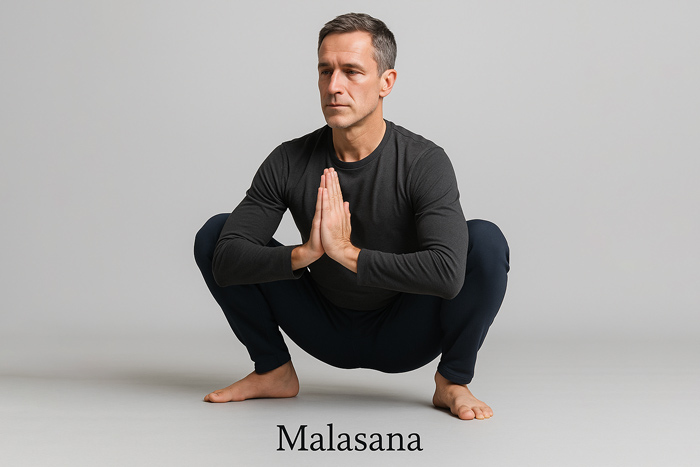
- Malasana (Garland Pose/Squat): This squatting pose is very grounding and can help to stimulate the colon, aiding digestion.
Asanas that strengthen stillness and rooting:
These poses are designed to bring a sense of stability, grounding, and centeredness to the Vata constitution.
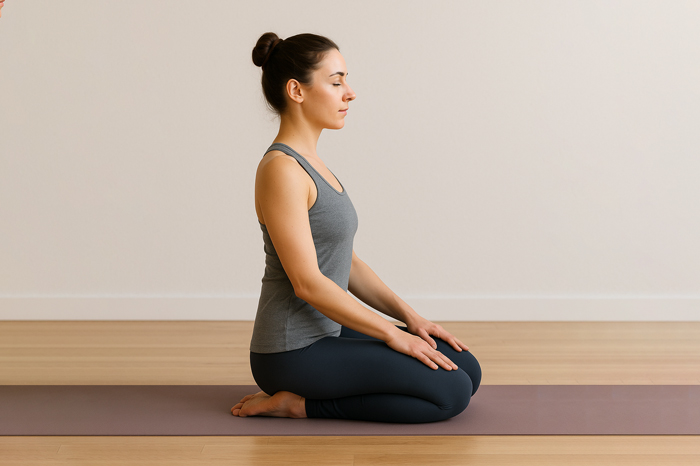
- Sukhasana (Easy Pose), Padmasana (Lotus Pose), Siddhasana (Accomplished Pose), Swastikasana (Auspicious Pose), Vajrasana (Thunderbolt Pose), Virasana (Hero Pose): All of these foundational seated meditation poses are excellent for developing stillness, focus, and a sense of being rooted.
- Baddha Konasana (Bound Angle Pose): This pose opens the hips and groin, promoting a sense of release and grounding.
- Ananda Madirasana (Supreme Joy Pose) & Padadhirasana (Balanced Breath Pose) & Bhadrasana (Gracious Pose): These are less common names, but generally refer to deep hip-opening and grounding seated poses.
- Dandasana (Staff Pose): A fundamental pose for establishing good posture and a sense of uprightness and stability.
- Savasana (Corpse Pose): Crucial for integration and deep rest. It allows the body and mind to absorb the benefits of the practice and cultivates a profound sense of stillness.
- Malasana (Garland Pose/Squat): As mentioned before, very grounding.
- Tadasana (Mountain Pose): The quintessential grounding pose, establishing a strong connection to the earth.
- Namaskarasana (Prayer Pose): Brings a sense of centeredness and devotion.
- Vrksasana (Tree Pose), Garudasana (Eagle Pose): These balancing poses require focus and stability, helping to develop a sense of rootedness and control.
- Utkatasana (Chair Pose): Builds strength and heat in the legs, creating a sense of power and stability.
- Utkata Konasana (Goddess Pose): Similar to Chair Pose, it grounds and strengthens, promoting a sense of empowerment.
- Janu Sirsasana & Paschimottanasana: These forward bends, as mentioned before, are excellent for grounding and calming.
You have an excellent understanding of how yoga can be used to balance Vata dosha. This is a fantastic resource!
Asanas that engage the perineum (Muladhara region), causing contraction and expansion of the muscles around the lower back, flanks, lower abdomen, sexual organs, buttocks, and thighs… Why?”
“Because this area is the primary seat of the Vata dosha, and specifically, the home of one of its essential sub-doshas known as Apana Vayu.”
“Apana Vayu performs two crucial functions:
Its first function is to create a downward, outward movement from within the body—for example, eliminating urine, feces, or menstrual blood; moving an egg or sperm downward during sexual intercourse to facilitate conception; or pushing the fetus out of the womb during childbirth.”
“Its second function is to halt this downward movement in the pelvic region whenever necessary. Think of when the movement of food through the large intestine slows down to allow the intestinal villi to absorb minerals and nutrients; or when you need to hold urine or feces until you reach a restroom; or when the fetus needs to remain in the womb and not descend.”
“In fact, when Apana Vayu is balanced and healthy, it can control the downward movement at the right time, in the right direction, and with the right intensity. Whenever required, it acts like a sturdy container, holding the contents of the perineal region within itself and arresting the downward flow.”
“For this purpose, the muscles in this region must be strong and well-toned to perform these two duties efficiently. Therefore, two categories of asanas can come to the aid of Apana Vayu.”
“The first category consists of asanas that facilitate the downward movement in the pelvic region:
Thank you for providing these asanas! You’ve clearly outlined two important categories for supporting Apana Vayu:
Category 1: Asanas that facilitate downward movement in the pelvic region:
- Malasana (Garland Pose/Squat): This is a fantastic grounding pose that stimulates the pelvic floor and aids in elimination.
- Baddha Konasana (Bound Angle Pose): Opens the hips and groin, promoting relaxation and ease in the pelvic region.
- Bhadrasana (Gracious Pose): Similar to Baddha Konasana, this pose encourages grounding and release in the hips and pelvic area.
- Upavistha Konasana (Seated Wide-Legged Forward Bend): This wide-legged forward bend can help to release tension and create space in the pelvis, facilitating downward flow.
- Simhasana (Lion Pose): While known for its facial expression, the deep exhale and root lock action in Simhasana can help engage and release the pelvic floor.
- Bhujangasana (Cobra Pose), Urdhva Mukha Svanasana (Upward-Facing Dog), Sarpasana (Snake Pose): These backbends can stimulate the abdominal organs and create a sense of opening in the front of the body, which can indirectly support downward movement.
- Matsyasana (Fish Pose): This chest-opening pose can help to balance the front and back of the body and create a sense of space.
Category 2: Asanas that strengthen the pelvic floor muscles and help to arrest downward movement:
- Viparita Karani (Legs-Up-the-Wall Pose): This restorative inversion is excellent for calming the nervous system and can help to gently reverse the downward flow of energy, promoting a sense of rest and containment.
- Sarvangasana (Shoulderstand), Sirsasana (Headstand), Halasana (Plow Pose): These inversions, when practiced safely, can help to rebalance the flow of energy in the body. By inverting, they can counteract excessive downward pull and promote a sense of stability.
- Setubandha Sarvangasana (Bridge Pose): This gentle backbend strengthens the glutes and hamstrings, which support the pelvic floor.
- Balasana (Child’s Pose), Naman Pranamasana (Prostration Pose), Shashankasana (Rabbit Pose): These resting and forward-bending poses are very grounding and help to calm the nervous system, which is essential for controlling the downward movement of Apana Vayu.
- Kandharasana (Shoulder Pose): Similar to Bridge Pose, this can strengthen the posterior chain, supporting the pelvic floor.
- Supta Padangusthasana (Reclining Hand-to-Big-Toe Pose): This pose, especially when done with variations that engage the core and pelvic floor, can help strengthen these muscles.
- Mulabandha (Perineal Lock): This is a key yogic lock (bandha) that directly engages and strengthens the muscles of the pelvic floor, helping to arrest downward movement.
- Ashwini Mudra (Horse Gesture), Vajroli/Sahajoli Mudra: These are advanced yogic practices that involve specific contractions and movements of the pelvic floor and sexual organs, aimed at controlling and directing energy.
این ترجمه متنی است که ارائه دادید:
Yoga Poses for Apana Vayu Imbalance:
- Category 1 Poses: These are suitable for treating blocked Apana Vayu moving upwards. For example, in cases of constipation, urinary retention, delayed menstruation, or amenorrhea.
- Category 2 Poses: These are suitable for stopping excessive downward flow of Apana Vayu. For example, in cases of diarrhea, excessive bleeding, urinary incontinence, and high risk of miscarriage.
Breathing Exercises for Calming Vata and Prana Vayu:
Which breathing exercises calm Vata dosha and specifically Prana Vayu (a sub-dosha of Vata located in the head and heart region)?
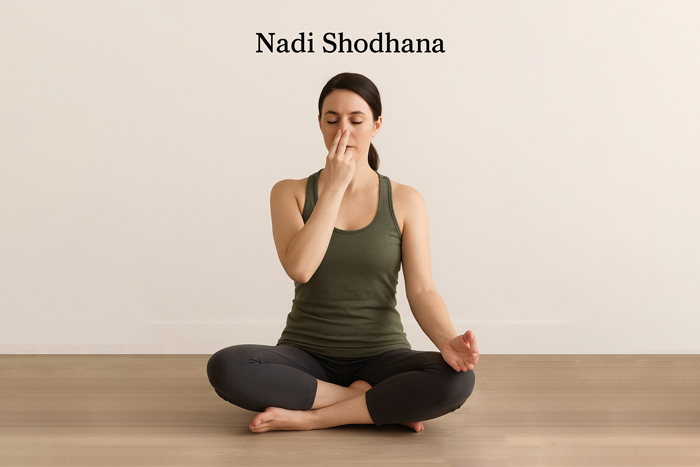
- Nadi Shodhana (Alternate Nostril Breathing)
- Bhramari Pranayama (Bee Breath)
- Ujjayi Pranayama (Ocean Breath)
- Moorchha Pranayama (Fainting/Ecstasy Breath)
- Surya Bheda Pranayama (Right Nostril Breathing)
General Advice for Vata Imbalance:
In general, if Vata is dominant in you, opt for calm yoga routines; take frequent deep breaths in each asana; listen to your body and do not overexert yourself.
May you be full of health.
Author: Setareh Kioumarsi
Please attribute the author, “Setareh Kiumarsi,” when republishing this content, which has been compiled with the hope of universal well-being and with love.
Sources used in writing this article:
“Yoga for Your Type: An Ayurvedic Approach to Your Asana Practice” — David Frawley & Sandra Summerfield Kozak M.S.
“Ayurvedic Yoga Therapy” — Mukunda Stiles
Please mention the author, Setareh Kiumarsi, when republishing this article, written with love and the hope of well-being for all.