



By Setareh Kiumarsi
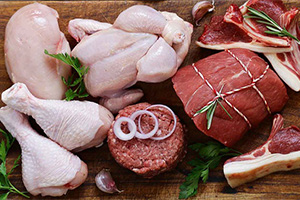
Have you ever paid attention to how much meat you eat in one meal?! Half a palm? A full palm?! A whole skewer of chicken kebab?! Four pieces of fried chicken?! Two skewers of kebab?!A whole fried trout?! Or maybe a large steak?!
And how often do you eat meat each week?! Every day?! Both for lunch and dinner?!
Animal proteins especially red meat and seafood… are much harder to digest compared to vegetables, fruits, and other foods. Our digestive system simply doesn’t have the capacity to process them in large quantities?! When you consume too much protein, the environment of your digestive tract becomes acidic, your liver becomes fatty, your kidneys are overworked (as they try to excrete high levels of uric acid), and your blood becomes thicker…?!
When you eat a large amount of animal protein, your digestive tract can only digest about 10–20% of it… the rest stays inside for hours like a heavy stone!
What does excessive protein consumption do to your body…?!
Overeating animal protein affects your mood — it increases ego, aggression, anger, depression, and lethargy.
People with a strong, healthy digestive system can handle slightly less than half a palm’s worth of animal protein per meal (about the size of four fingers placed together).
Those with weak digestion can barely process even half of that!
So if you’ve ordered a serving of chicken kebab, eat only one or two pieces per meal.
If you’ve cooked a chicken breast, eat no more than one-third of it per meal.
If you’ve grilled a trout, eat no more than one-fourth of it per meal.
Red meat is much harder to digest than poultry.
If you’re having a stew for lunch, take no more than one or two small pieces of meat (about ¼ of your palm).
And remember…only one meal per day should contain animal protein.
Which animal proteins are the hardest to digest?!
Beef, veal, and pork.
Avoid these as much as possible!
Have you noticed that on the days you eat a lot of these meats, your intestinal gas smells awful, your stool has a strong odor that lingers in the bathroom, and your sweat smells unusually sharp?
That’s because these proteins are extremely difficult to digest, and a large portion of them turns into toxins inside your digestive tract.
These undigested residues or mucus-like toxins become ideal food for bacteria and parasites. The unpleasant odors from your body and waste come from these toxic, undigested substances!
Which animal proteins are easiest to digest?
Poultry proteins are generally the easiest to digest.
Quail and partridge are the lightest and are often recommended for people with digestive issues.
Chicken, turkey, and ostrich are also easier to digest than red meat and seafood.
Within poultry, breast meat is easier to digest than thighs.
Fish is relatively hard to digest and produces excess mucus, so cook it with plenty of spices and eat it alongside lots of vegetables.
Eat red meat only once or twice a week.
Among red meats, goat, camel, and lamb (especially shoulder cuts) are easier to digest than beef and veal.
And never mix several types of animal protein in one meal!
Please make sure to mention the author, “Setareh Kiumarsi,” if you share or republish this article, which was written with hope for everyone’s health and love.