

When, where, how much, and how to use it?
Did you know that in Ayurveda, fennel is considered one of the most balancing medicinal herbs and is recommended for people of all body types?
What’s its quality?
It is slightly warm and dry… What does that mean? It means that even people with a warm constitution can safely use it.
What does it do in our body?
It relieves bloating, aids digestion, treats colds, is anti-parasitic, helps with anemia, purifies the blood, acts as a diuretic and cleanses the kidneys, relieves constipation, manages diabetes, contains phytoestrogens (so it promotes menstruation and helps with menstrual flow), calms the heartbeat, strengthens eyesight, acts as a relaxant, and reduces anxiety.
In traditional Iranian medicine, it is strongly recommended that only women consume fennel, but in Ayurveda, moderate consumption is also recommended for men.
Who should avoid it?
If you have a history of cancer in reproductive organs (breasts, ovaries, or uterus), it’s better not to consume fennel.
How to use it?
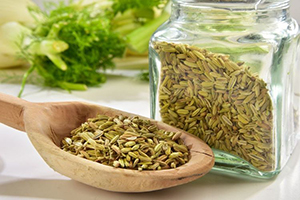
One of the most popular Ayurvedic combinations is equal parts fennel, green cumin, and coriander seeds. You can mix these three herbs as powder and use them as a spice in cooking, or combine them as whole seeds and brew them like tea. Another method: after a meal, chew ½ teaspoon of this mixture like gum and swallow to aid digestion.
Other benefits of fennel
Do you have bloating or heart palpitations?
Add a little warm water to ¼ cup yogurt and stir well until smooth. Fill the rest of the cup with warm water, add 1 teaspoon fennel powder and a pinch of salt, and drink.
Do you have anemia?
Boil 2 tablespoons of fennel seeds and 1 teaspoon rose petals in 1½ cups of water until only 1 cup remains. Strain and drink twice a day.
Do you feel like your vision needs to get better?
Add ½ teaspoon fennel powder to a cup of carrot juice and drink.
Do you have delayed or difficult periods?
From 2–3 days before menstruation, drink 1 cup of fennel tea 3–4 times daily (1 teaspoon fennel seeds in 1 cup of boiling water).
Please make sure to mention the author, “Setareh Kiumarsi,” if you share or republish this article, which was written with hope for everyone’s health and love.