


By Setareh Kiumarsi
Did you know that our biological clock, including our natural sleep and wake cycles, is aligned with the Earth’s rotation around the Sun, and thus with light and darkness?
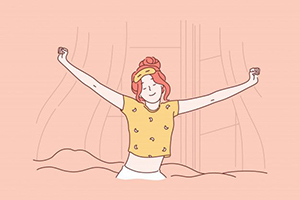
Did you know that when the sun rises and daylight begins, that’s when our day should begin too? That’s the time when the body is meant to shift from a horizontal to a vertical state.
Why Is That Important?
Remember this:
If our body is still horizontal when the sun rises, our metabolism slows down significantly. And when metabolism slows, something undesirable happens; the toxins that accumulated in the digestive system during the previous day don’t move downward as they should.
If that downward detox flow is blocked due to remaining in bed, digestion is delayed… and some of those toxins get reabsorbed into the body, embedding themselves deeper into tissues.
Your body begins to feel like a block of stone, and waking up or starting your day becomes ten times harder.
On top of all this, late waking dulls your mind, fills it with inertia and stagnation, and drains your mental sharpness.
What Happens If We Wake with the Sunrise?
Try starting your day around 6:00 to 6:30 a.m.
Give it a try — you’ll find your mind fresh, alive, and vibrant at this time.
Also, when your body rises with the light, toxins produced the day before start to move downward, ready to be released from the body in the form of urine and stool — a natural daily cleanse, exactly as your body intends.
And if you make the effort to wake up just a bit before sunrise, you’ll experience one of the most energizing and spiritually uplifting times of the entire day.
Meditation or prayer during this time fills you with purity, clarity, light, and energy to start a joyful and meaningful day.
What About Napping During the Day?
To answer that, consider this:
Have you ever noticed how heavy, sluggish, and foggy you feel after sleeping right after a meal?
That’s because digestion is a process that depends on downward movement in the body.
After you swallow, food needs to move from the mouth → to the esophagus → to the stomach → to the small intestine → and then to the large intestine.
When you lie down horizontally right after lunch or dinner, you disrupt this vertical flow.
Metabolism slows down, and your body becomes more prone to producing undigested phlegm and toxins in the digestive tract.
This often leads to bloating, gastric inflammation, acid reflux, and heartburn.
So what’s the solution if you absolutely must nap during the day (even though it’s not recommended)?
- Wait at least two hours after eating before lying down.
- Lie on your left side on a slightly inclined surface.
- And don’t sleep more than 20 to 30 minutes!
To learn about proper nighttime sleep, make sure to check out our other article in the General Ayurveda Teachings section.
Please be sure to credit the author, Setareh Kiumarsi, when sharing or republishing this article, which was written with love and the hope of well-being for all.


