



by Setareh Kiumarsi
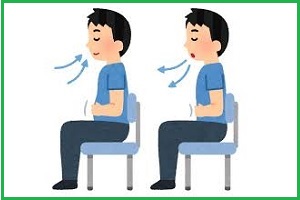
Have you ever noticed how babies breathe? When they inhale, their bellies puff up like balloons, and when they exhale, their bellies deflate and sink back down.
Now take a look at your own breathing. When you inhale, it’s probably shallow, barely filling even the upper part of your lungs, let alone reaching your lower abdomen to expand your belly.
It’s as if, somewhere along the path to adulthood, we’ve forgotten how to breathe with our bellies. What we now do is a shallow, incomplete form of chest breathing. To put it simply, if your body was designed to inhale, say, 100 units of oxygen with every breath, you’re barely drawing in 10 units because of how shallow your breathing has become.
Did you know that oxygen is one of the most vital and nourishing “foods” for your cells? And that many researchers believe one of the root causes of cancer is low oxygen levels in the cells?
Supporting Digestion Through Belly Breathing
Every time you expand your belly with an inhale and draw it in with an exhale, you’re actually supporting the natural wave-like contractions of your intestines. These movements help stimulate the digestive muscles, your intestines, pancreas, stomach, and liver. You’re giving them a gentle “massage,” encouraging the release of bile, digestive acids, and enzymes.
Even better, if there’s any undigested food left in the intestines, deep abdominal breathing helps move it downward and re-engage the digestive process. So whenever you feel heavy or bloated, try doing 20 deep abdominal breaths every hour—it really helps!
You can train yourself to breathe from your belly again. Just practice it consciously for a few days, and soon your body will remember how to do it on its own.
Prana and Pranayama
Have you ever heard the term prana in a yoga class? It means “life force.” Prana is the bridge between the body and the soul.
Breathing is one of the most tangible ways prana flows through us. It is this sacred breath that brings consciousness into our bodies. The moment prana leaves the body, consciousness also departs—and life ends.
You may have also heard the term pranayama in yoga. It means “to regulate or control prana with awareness.” Pranayama involves yogic techniques that bring mindfulness to your breath. Through this practice, you create harmony between breath, energy, emotions, and awareness.
When prana is imbalanced, the mind becomes agitated and scattered, noisy, jumping from one thought to another. But when prana is balanced and flowing freely through you, your mind becomes calm and serene, like a still ocean, full of peace and contentment.
Try it for yourself. The next time your mind is racing, take 5 to 6 minutes and breathe deeply and mindfully. You’ll be filling yourself with prana—the life-giving force. Almost magically, your thoughts will quiet, your emotions will stabilize, and your clarity and awareness will rise.
In future posts, we’ll explore practical techniques for proper, mindful breathing.
If you share this article—written with love and in the hope of supporting health for all—please credit the author, Setareh Kiumarsi.


